Single / Post
- Posted Date:
- Jan 20, 2023
- Category:
Management Styles: Business English Vocabulary
Managing people is no small challenge. A manager needs to be well organised and able to organise others, and the communication problems that come up every day at work, especially in an international environment, can cause real trouble. In this lesson you'll learn about different management styles and the specialist vocabulary that will help you work more effectively in business.
Management styles
Here are three basic management styles. Read about them, then do Exercise 1.
- AUTOCRATIC. Idea: managers make the important decisions, give orders and closely monitor employees' work without taking part in the tasks. Pros: fast decision-making is effective when managing a large number of low-skilled workers. Cons: a lack of two-way communication can create a "them and us" attitude between managers and workers.
- PATERNALISTIC. Idea: managers consult employees, listen to their feedback and make decisions in their best interests, but still see close supervision as necessary. Pros: more two-way communication can be more motivating and allows workers' social needs to be met. Cons: slower decision-making, and the style can still slide into a dictatorial or autocratic approach.
- DEMOCRATIC. Idea: managers trust and empower employees, encourage them to make decisions and listen to their advice, creating a more collaborative workplace. Pros: delegating authority helps when complex decisions need specialist skills. Cons: slower decision-making, and more mistakes when employees are not skilled or experienced enough.
Exercise 1: which management style does each conversation show?
Conversation 1
Recording: Conversation 1
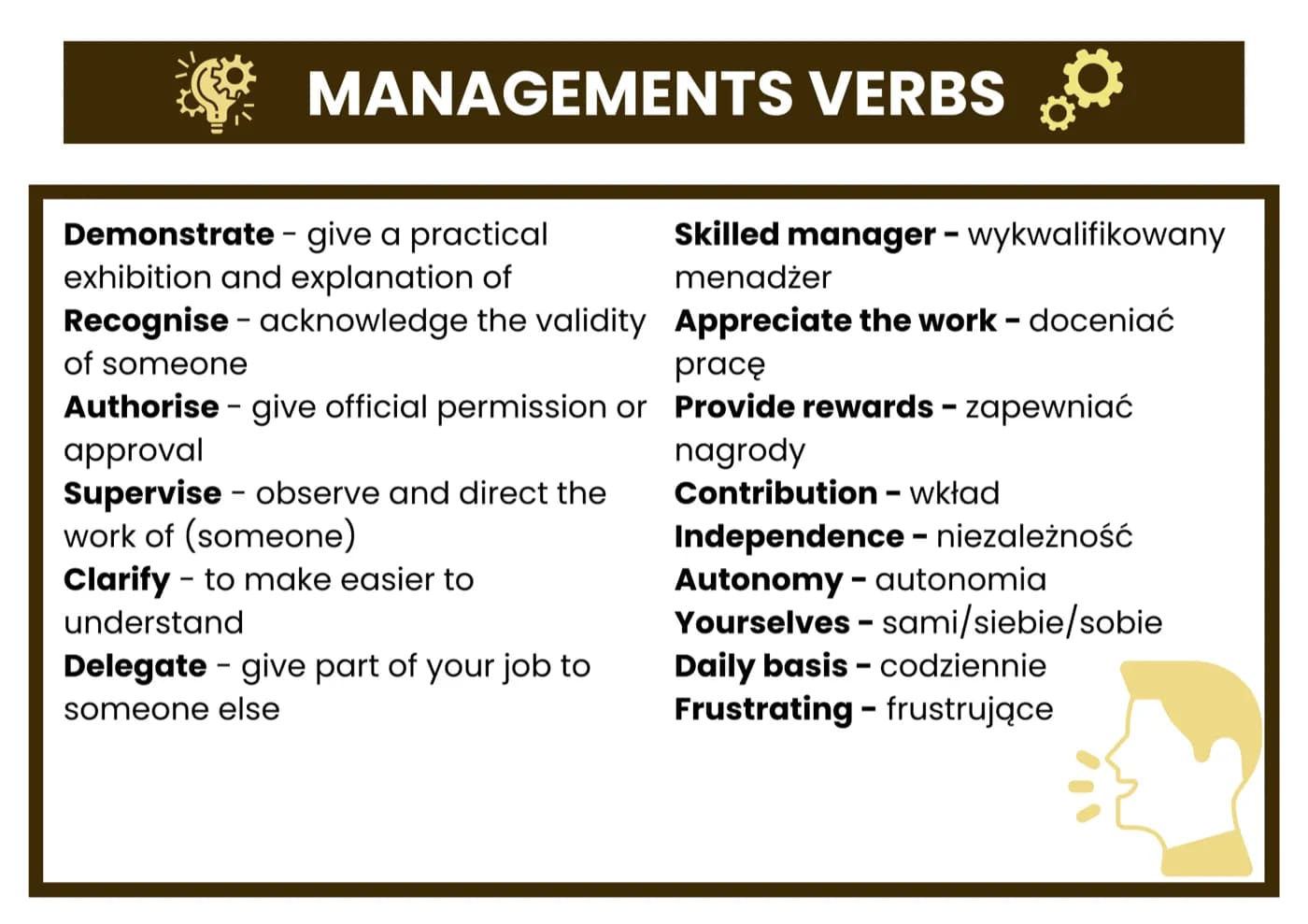
Employee: Hi, I was wondering if we could discuss the project deadline. I think it might be too tight given the current workload.
Manager: The deadline is non-negotiable. I've made the decision, and it's not up for discussion.
Employee: Okay, I understand. But I just want to point out that I think it could be unrealistic, and it might lead to mistakes or lower-quality work.
Manager: I appreciate your concern, but I have full confidence in your ability to handle the workload. I expect the project to be completed on time and to the highest standard.
Employee: Okay, I'll do my best.
Manager: Good. Now, let's move on to the next point on the agenda.
Conversation 2
Recording: Conversation 2
Employee: Hi, I wanted to talk to you about the new project proposal. I have a few ideas on how we could approach it.
Manager: Great, I'm always open to new ideas. What do you have in mind?
Employee: Well, I was thinking we could involve the whole team in the planning process. That way we get everyone's input and come up with the best solution.
Manager: I like that idea. What do you suggest we do?
Employee: We could hold a team meeting and brainstorm together, or we could create a survey and gather feedback that way.
Manager: Those are both good options. Let's poll the team and see which method they prefer.
Employee: Sounds good. Thanks for considering my suggestion.
Manager: Of course. I value the input of every team member.
Conversation 3
Recording: Conversation 3
Employee: Hi, I wanted to talk to you about the new policies that were just introduced. I'm not sure I understand how they'll work in practice.
Manager: Of course, I'd be happy to explain. You know, I always want what's best for our team, and I believe these policies will help us work more efficiently.
Employee: Okay, that makes sense. But I'm still a bit confused about how to apply them in my own work. Could you give me some examples?
Manager: Sure. Let me give you a few examples of how these policies apply to your work. I'm here to support you and make sure you have all the tools you need to succeed.
Employee: Thank you, that really helps.
Manager: No problem. I'm here to help. Just let me know if you have any other questions or concerns.
Character traits of a manager
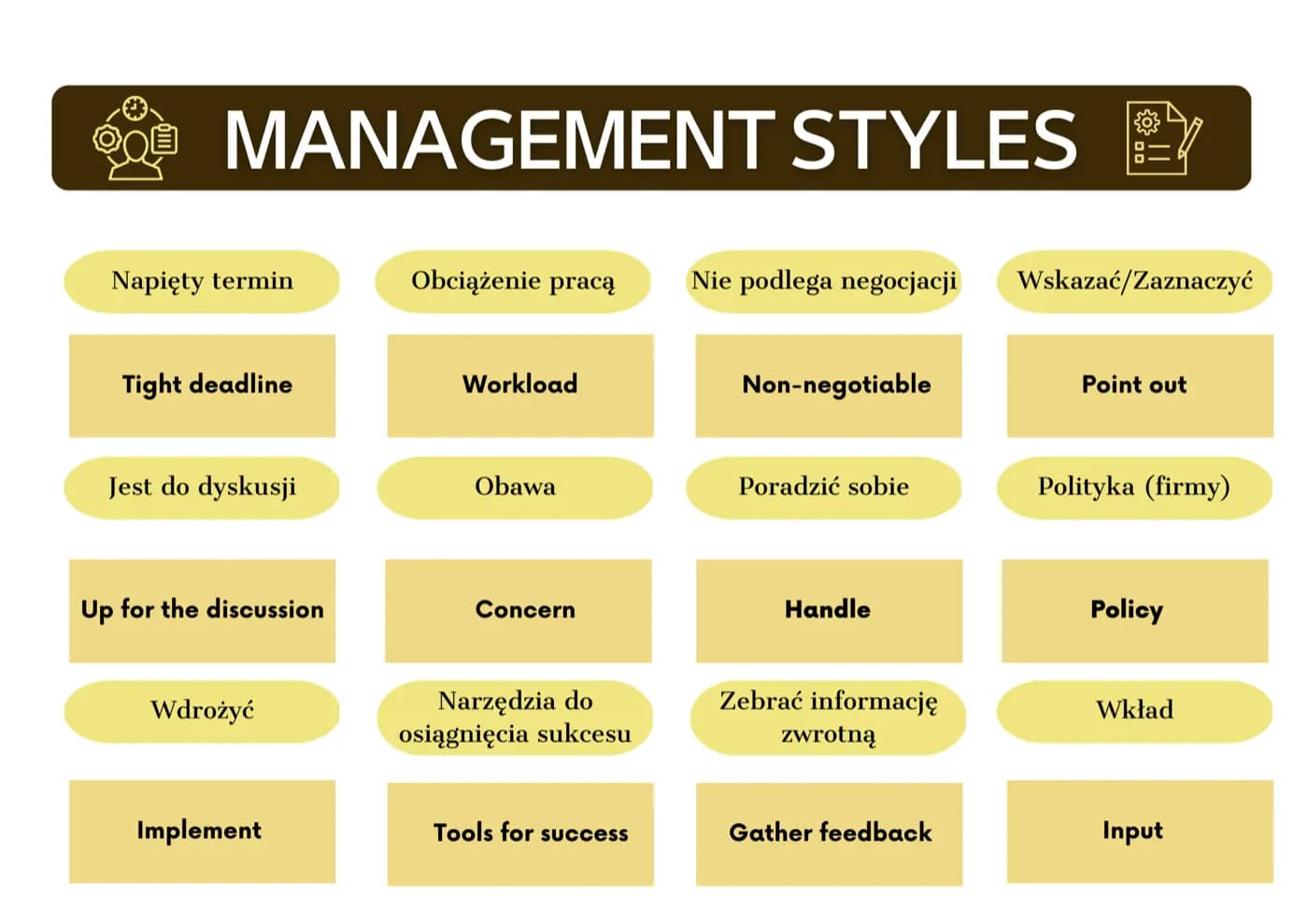
A manager needs certain character traits to be a good leader. Look at the traits below and decide which are strengths and which are weaknesses.
compassionate / persistent / immature / courageous / bossy / grumpy / resilient / diligent / malicious / decisive / committed / doubtful / impartial
- Strengths: ……………………………………
- Weaknesses: ……………………………………
Exercise 2: fill in the gaps with the character traits above
- The manager was ……. towards his employees, always taking the time to listen to their concerns and offer support.
- I admire him. He is always ……., even when the choices are hard to make.
- Our manager is ……. in her work, often putting in extra time to understand the problem and find good solutions.
- The worst trait in a manager is being ……., telling employees what to do and expecting them to follow orders without question.
- She was ……. to helping whenever we needed her advice.
- The co-worker had ……. intent when spreading rumours about her manager, hoping to cause harm and damage her reputation.
- The company had some financial difficulties, but thanks to ……. leadership it secured long-term success.
- When a conflict between employees arises, it is crucial to stay ……. and listen to both sides.
- You should be more ……. in your work if you want that manager position.
- The manager was ……. because she had to stay late at the office to finish a project and felt overwhelmed by the amount of work.
- His ……. behaviour, such as constantly complaining about his job and not taking responsibility for his actions, was causing tension in the team and hurting productivity.
- A ……. attitude helped them get through the setbacks they faced.
- Employees were ……. about the new marketing strategy, despite the manager's assurances.
Management verbs
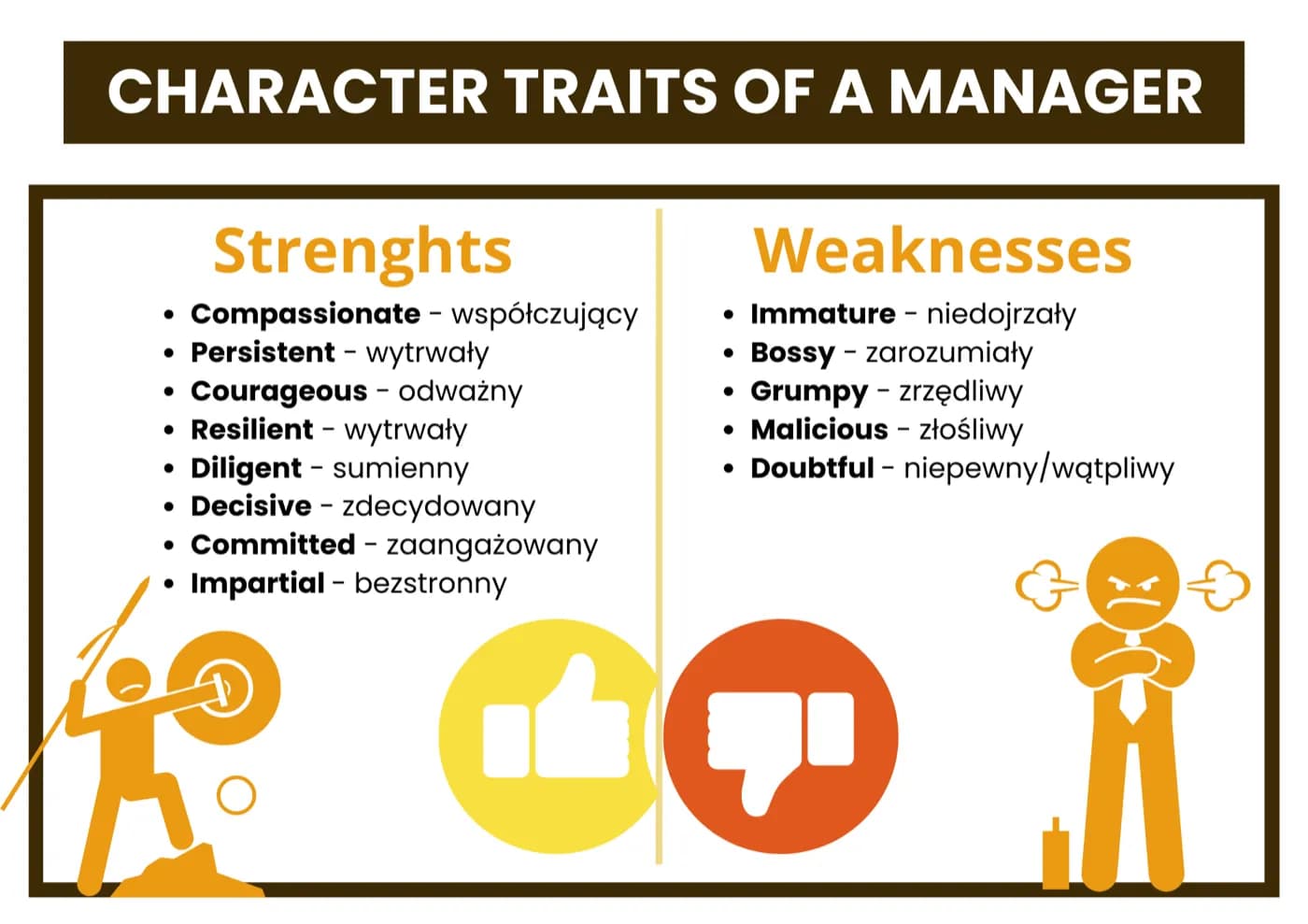
Here is some management vocabulary you can use every day. Match the verbs to the definitions.
- Demonstrate
- Recognise
- Authorise
- Supervise
- Clarify
- Delegate
- to give official permission or approval
- to give part of your job to someone else
- to make something easier to understand
- to acknowledge the value of someone or their work
- to show and explain something in practice
- to watch over and direct someone's work
Exercise 3: fill in the gaps with the verbs above
- If an employee doesn't understand your instructions, you will need to …….
- A skilled manager is able to ……. tasks to others so they have enough time for their own work.
- A good manager should ……. and appreciate their employees' work, and reward their contributions.
- Some managers prefer to closely ……. their team's work, while others give employees more independence and autonomy.
- My colleague will ……. the process, and then you'll have the chance to try it yourselves.
- Managers have to ……. many tasks every day, which can be frustrating for employees.
So, do you now know how to be a good manager? I hope so! What do you think makes management effective?