Single / Post
- Posted Date:
- Dec 25, 2022
- Category:
How to Run Business Meetings in English

Business meetings are part of daily life for corporate and office staff, managers and many others in business. The fate of a whole company can depend on how a meeting goes, so it pays to prepare. It starts with finding a date, which isn't always easy: busy schedules and the unexpected can get in the way. Once you've agreed a time, the real challenge begins: running a successful meeting. Good organisation is key to covering everything on the plan. In this lesson you'll learn how to handle a meeting from start to finish, and finally how to write a good meeting report.
Arranging a meeting
Let's start with setting up a meeting. Listen to Anna and Mark, who work for a large company.
Recording 1: arranging a meeting
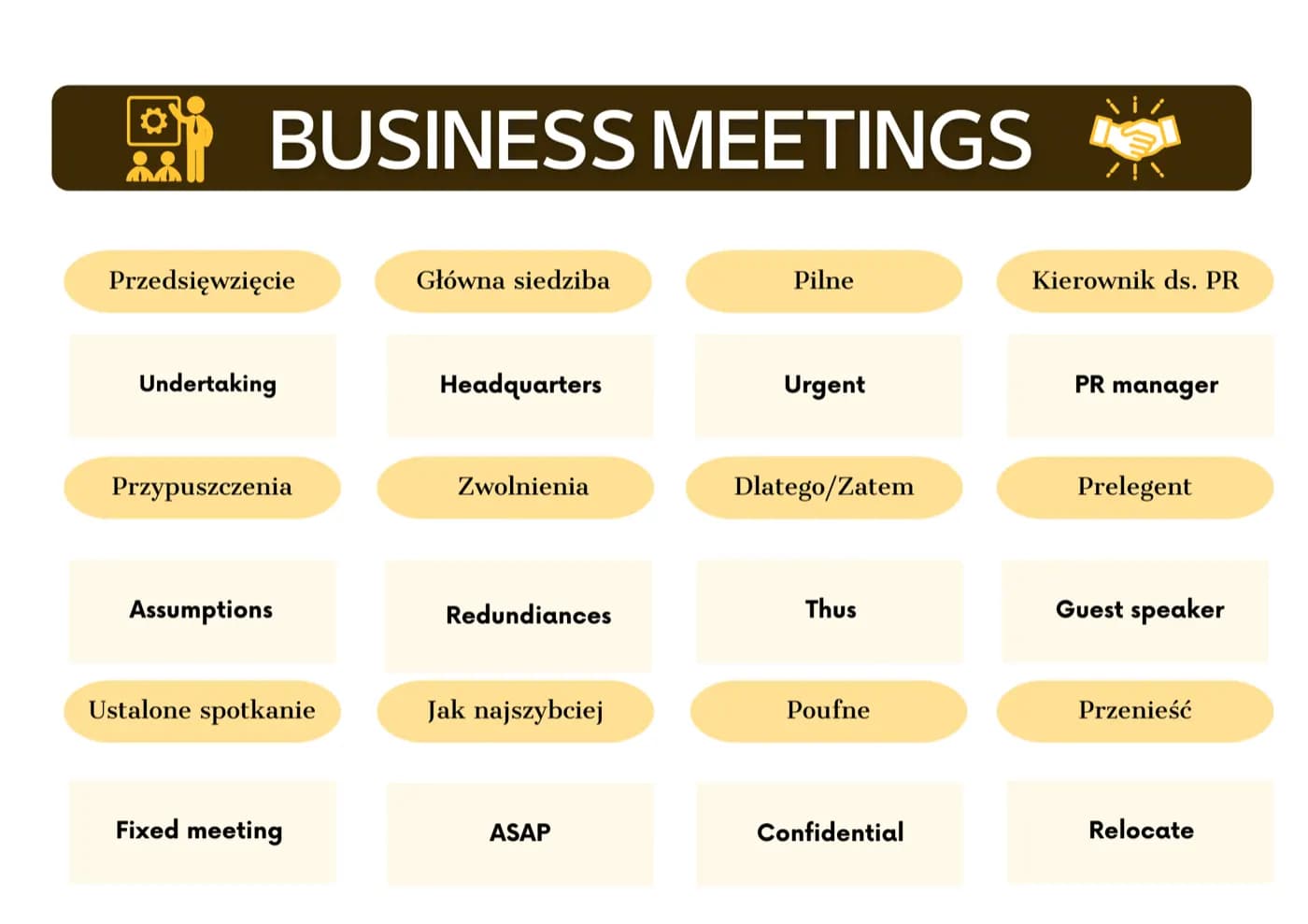
Anna: Hi Mark. As you know, our company is facing a huge undertaking: moving our headquarters. I need to discuss something with you.
Mark: What do you have in mind? Is it urgent?
Anna: Yes. The CEO has decided to tell employees about the move, and we need to prepare an official statement.
Mark: I see. As PR manager, I can handle that in my department. It's crucial to send a straightforward message so people don't start making assumptions.
Anna: Exactly. We aren't planning any redundancies, although employees can refuse to relocate and so give up their jobs.
Mark: When do you want to discuss it?
Anna: ASAP. Are you available tomorrow at 12?
Mark: I'm afraid I can't make it tomorrow. I'm speaking at a conference as a guest speaker. How about Wednesday?
Anna: Give me a second, I need to check my calendar. Umm… yes, I'm free at 6. Is that all right?
Mark: Okay, then the meeting is fixed.
Anna: Remember, everything I've told you is confidential. Don't share any information about the move!
Mark: Your secret is safe with me, don't worry!
Anna: Good, see you on Wednesday!
Exercise 1: listen again and fill in the gaps
Anna: Hi Mark, as you know our company is facing …………………, namely changing ………………… I need to discuss something with you.
Mark: What do you have in mind? …………………?
Anna: Yes, the CEO decided to inform ………………… about this change and we need to prepare an official statement.
Mark: I see, as a ………………… I can handle that in my department. It is ………………… to make a straightforward message to avoid …………………
Anna: Exactly, we don't plan any …………………, although employees can refuse to relocate and thus ………………… their jobs.
Mark: When do you want to …………………?
Anna: …………, are you available tomorrow at 12?
Mark: I'm afraid I ………………… tomorrow, I'm attending a conference as a ………………… How about Wednesday?
Anna: Give me a second, I must check my calendar. Umm… yes, ………………… Is that all right?
Mark: Okay, then the meeting is …………………
Anna: Remember that everything I've said is …………………, do not share any information about relocating!
Mark: The secret is …………………, don't worry!
Anna: Good, see you on Wednesday!
Chairing a meeting
Now let's chair a meeting! Read and listen to this meeting about the company's marketing strategy.
Recording 2: chairing a meeting
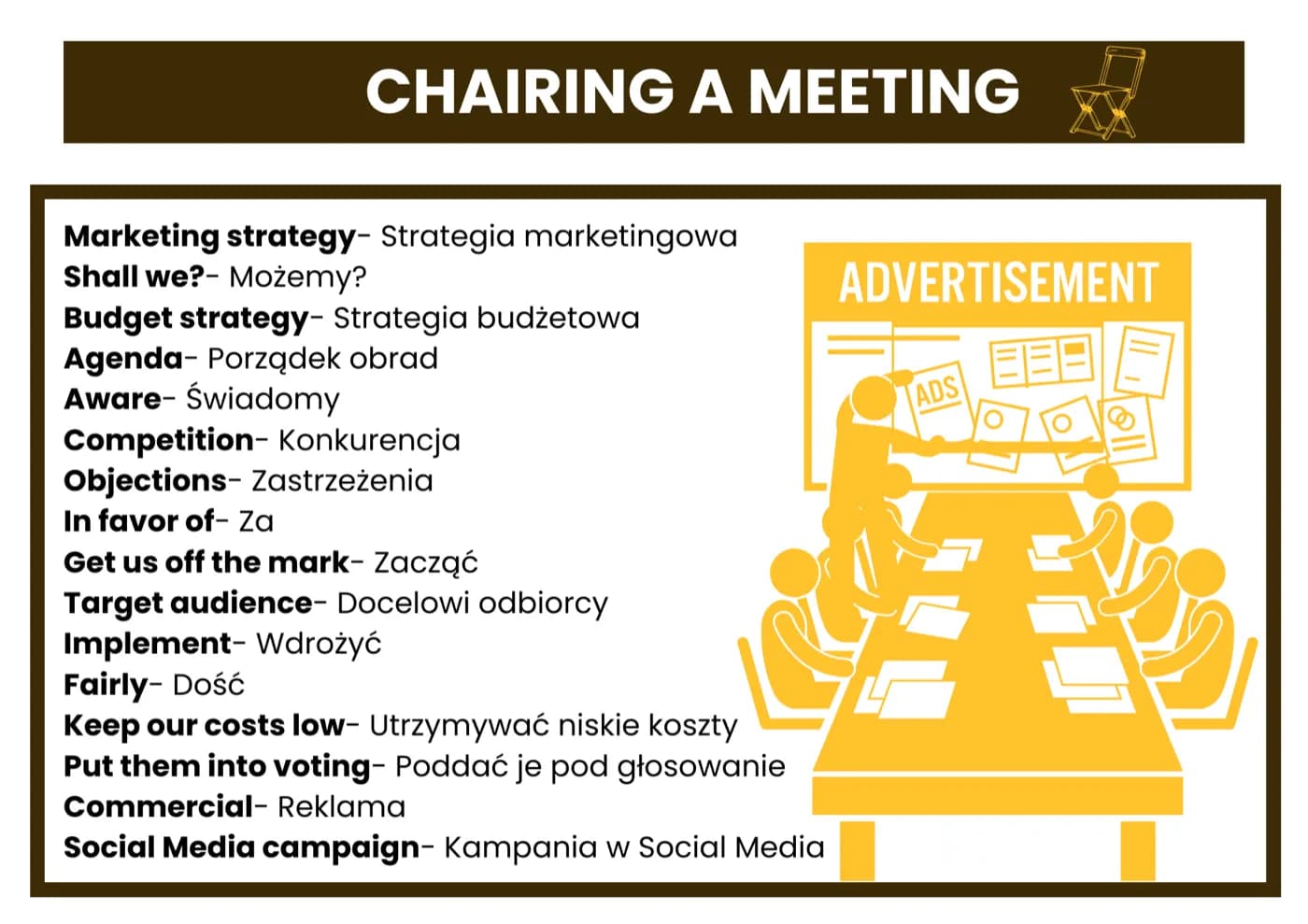
Chair: Good morning, everyone, and thank you for coming. As you all know, the purpose of this meeting is to decide on an effective marketing strategy for next year. Okay, let's get started, shall we? The first item on the agenda is advertising. You're all aware that the competition is getting pretty intense, and we really need to stand out more than ever. Harry has some ideas. Harry, would you like to get us started?
Harry: Yes, thank you. My idea is to focus on a social media campaign with well-known influencers. We need to reach a younger audience, teenagers and young adults, and social media is the key to that.
Chair: That's quite an interesting approach. Would anyone like to comment?
Kate: Yes, I'm not so sure about this idea. If we only approach popular influencers, it will be far too expensive, because most of them charge large sums for a single Instagram post. Maybe we could split our spending between top influencers and lesser-known ones. That way we'd reach a similar audience and keep our costs down.
Harry: That's true, but there are lots of advantages to working only with trending influencers. They have bigger, more engaged audiences, which means more people would actually check out our product and potentially buy it.
Chair: Thank you. Any other ideas?
Jacob: Given our budget, we could consider making an ad to run on Instagram, YouTube and Facebook. That way we could also reach the audience we need, and potentially get more clicks on our photos and videos than by promoting them through a few influencers.
Chair: Okay, we've heard a lot of great ideas today, so I'm going to put them to a vote. Who is in favour of Harry's idea?
Chair: I see four, six, seven votes. All right, who is in favour of Kate's idea?
Chair: Nine votes. Moving on to the final proposal, who is in favour of Jacob's idea?
Chair: Four votes. That means we're going to implement Kate's idea. Any objections?
Harry: No, I think it's a better strategy than mine.
Chair: Okay, now that's settled, let's move on to the budget.
Exercise 2: match the expressions to their meanings
- 1. Chair
- 2. Campaign budget
- 3. Influencer
- 4. Social media campaign
- 5. Target audience
- 6. In favour
- a. A person or thing that influences another.
- b. A marketing effort that supports a business goal using one or more social media platforms.
- c. The person in charge of a meeting.
- d. A particular group at which an advertisement is aimed.
- e. Supporting or approving of something.
- f. How much a particular campaign is allowed to spend.
Writing a meeting report
After a business meeting you often need to write a report. It isn't always easy, so here are some useful tips to make your reports better. You can also listen to them here.
Recording 3: tips for a meeting report
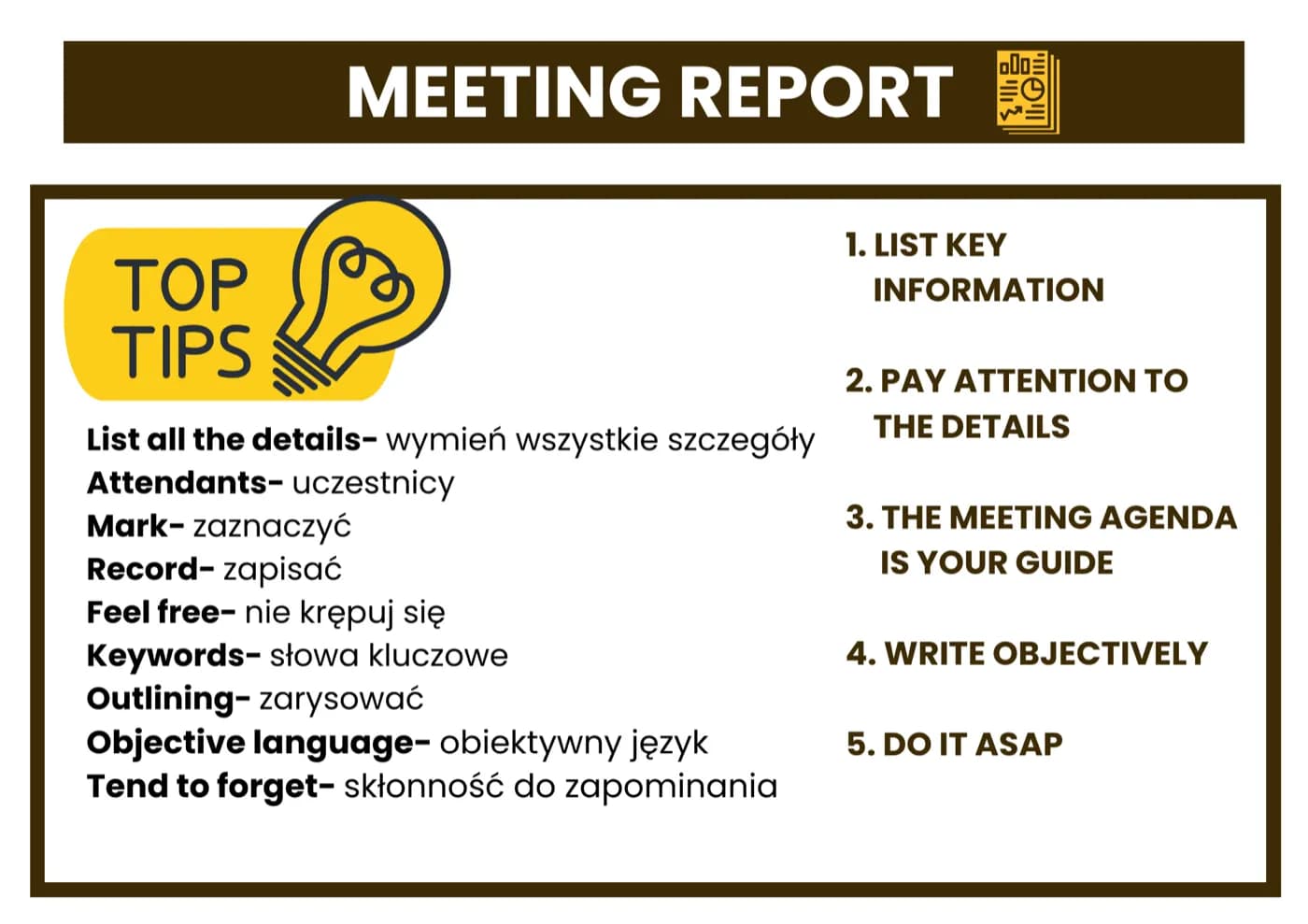
List the key information
List all the details about the people at the meeting, specify their roles and note who did not attend.
Pay attention to the details
Record everything that was said. Don't copy people's words exactly, but do mention who took part in which parts of the discussion. Write down the keywords and all the details you think are necessary.
The agenda is your guide
The agenda lists everything that should be discussed at the meeting. Outlining it in your report helps readers understand what happened and why something came up. The report should also note anything that was missed.
Write objectively
Stick to objective language. Keep personal comments to yourself and present events as they happened.
Do it ASAP
Don't leave writing up the meeting until the last minute. The sooner, the better. People forget details over time, which could cause problems for you if you can't remember who said what.
Business meetings usually follow a formal procedure: they run in a set order and are often minuted. Whatever the reason for a meeting, it should be orderly and lead to its goal. With these tips on report writing, you'll work more efficiently and focus on what matters most.