Single / Post
- Posted Date:
- Oct 21, 2022
- Category:
At the Pharmacy: English Phrases for Your Trip
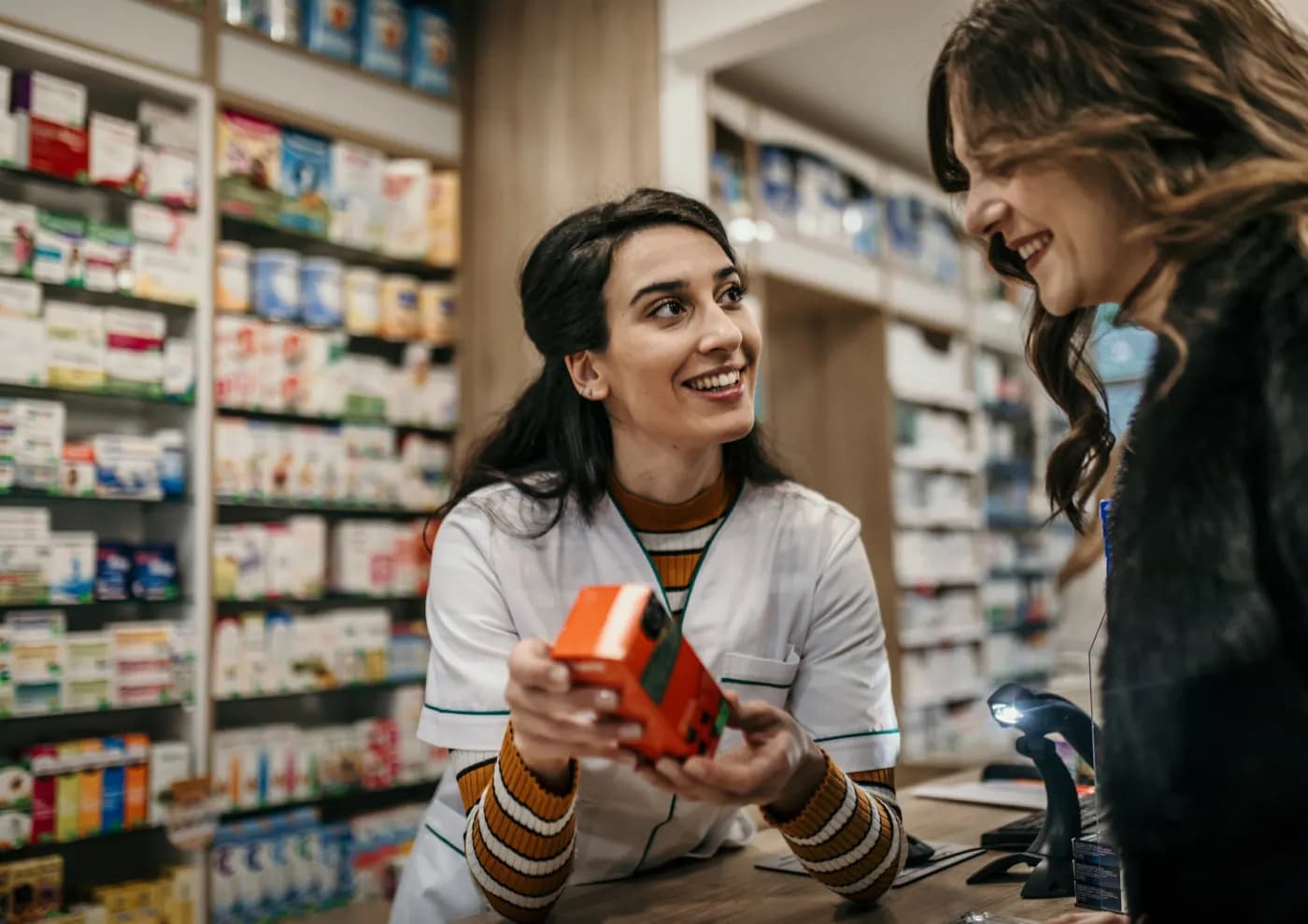
When you travel abroad, these phrases may turn out to be exactly what you need. In this lesson you'll learn the most common medicines in English and how to ask for them, have a full conversation with a pharmacist about your symptoms, and fill a prescription that you'll first need to decode.
Few of us pack a whole bag of medicines for a holiday. Nobody plans to get ill on a trip. Still, you may need to pop into a pharmacy for something for an upset stomach because the local food didn't agree with you, or you may need a doctor who writes you a prescription to take to the pharmacy. With the phrases and vocabulary below, you'll handle that situation calmly.
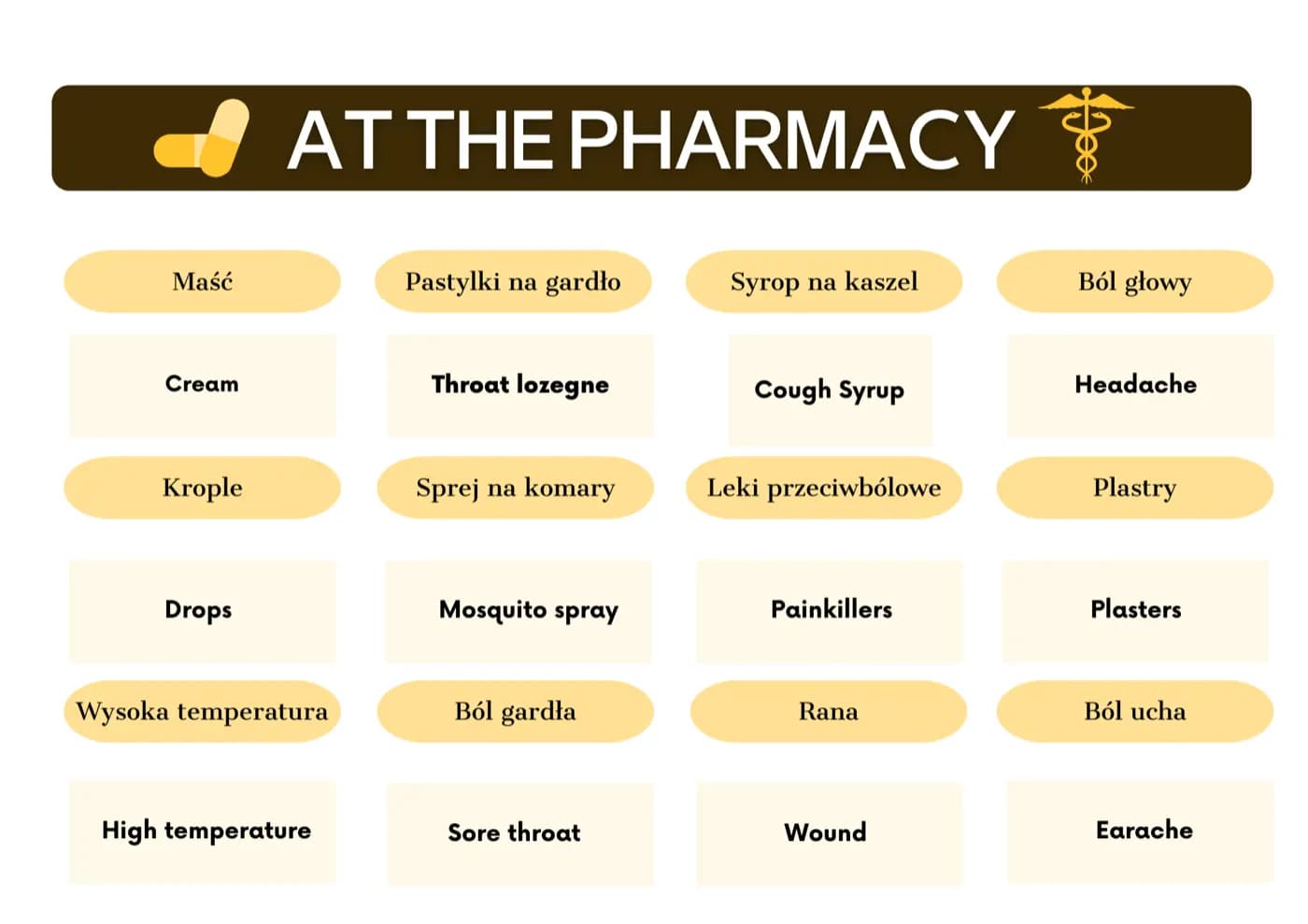
What you can buy at a pharmacy
- cream: something you rub on your skin
- thermometer: a device for measuring your temperature
- throat lozenge: a small tablet you suck to soothe a sore throat
- cough syrup: liquid medicine for a cough
- drops: liquid medicine you put in your eyes, ears or nose
- mosquito spray: a spray that keeps mosquitoes away
- painkillers: tablets that reduce pain
- plasters (US: Band-Aids): small strips that cover a cut
How to ask if something is available
- Hello, do you have any…?
- I need… Is it available?
- I'd like to buy… Do you stock it?
If you don't know which medicine to take, describe your symptoms and let the pharmacist suggest something:
- I have a cough. What do you recommend? / This cough syrup will help with your cough.
- I woke up with a headache today. What can I take to feel better? / I'd recommend some painkillers.
- Sorry, I think I have a high temperature. Do you have anything to measure it? / Of course, we sell thermometers.
- I got bitten by a mosquito and it really hurts. / Don't worry. This cream should help, and this mosquito spray will keep them away in future.
- I cut myself chopping an onion. Do you have anything to cover the cut? / Yes, we have plasters in different sizes.
- I can barely speak. I have a sore throat. / Try these throat lozenges.
- I went out without my hat and now I have earache. / You can try these drops. They'll reduce the pain.
Now you know how to ask for medicines and explain what's wrong. Let's put it all together in a full conversation with a pharmacist.
A conversation with the pharmacist
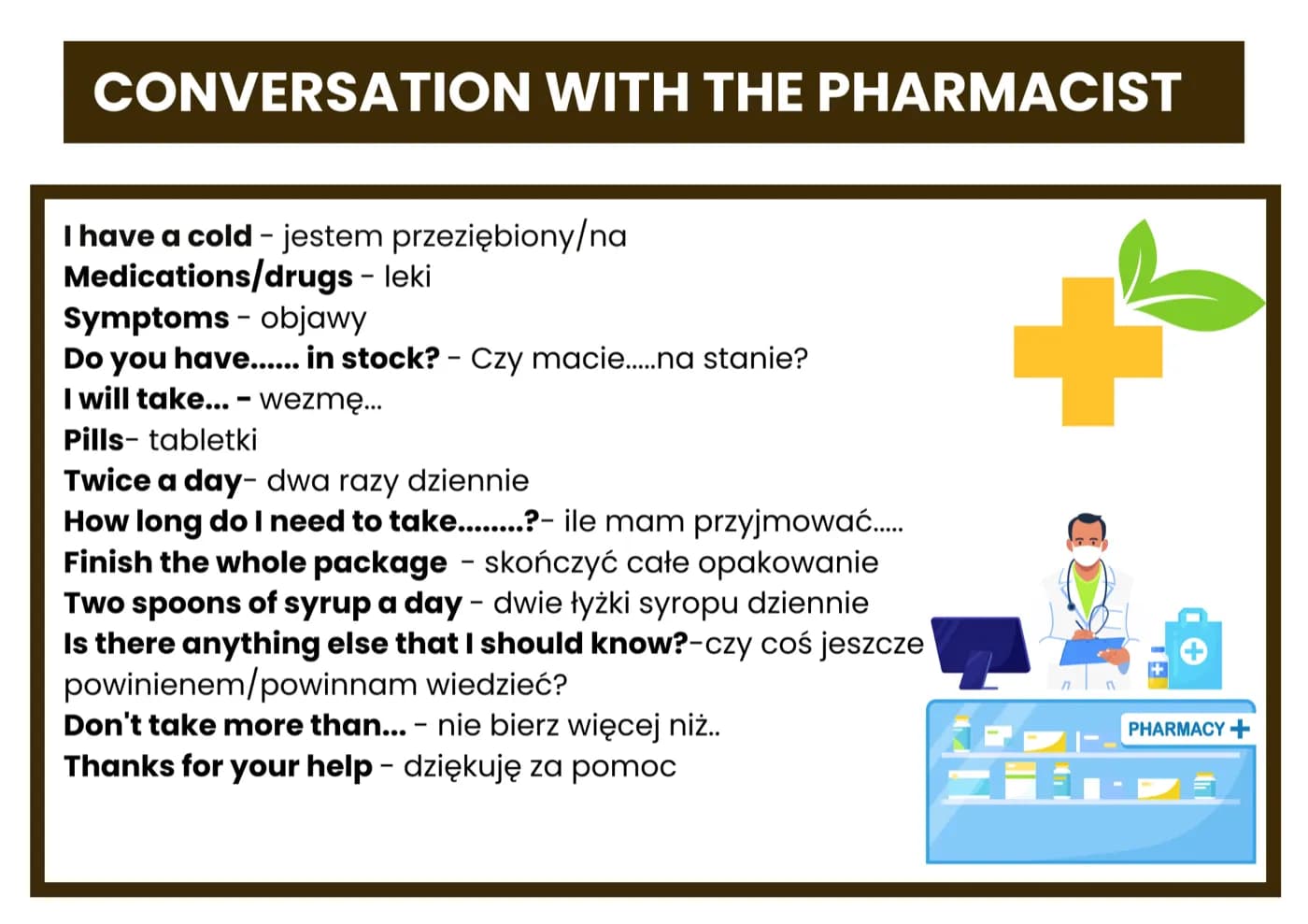
Customer: Hello, I think I have a cold and I need some medicine.
Pharmacist: What are your symptoms?
Customer: I have a headache, a sore throat and a cough.
Pharmacist: I'd recommend painkillers, cough syrup and throat lozenges. They'll help you.
Customer: I was thinking of mint throat lozenges. Do you have them in stock?
Pharmacist: Let me see. Yes, we do.
Customer: Good, I'll take them then.
Pharmacist: Okay. Take these pills twice a day with meals, once in the morning and once in the evening.
Customer: How long do I need to take them for?
Pharmacist: One week. You need to finish the whole pack.
Customer: Okay. What about the cough syrup?
Pharmacist: Two spoonfuls a day. You can take them in the evening.
Customer: Thank you. Is there anything else I should know?
Pharmacist: Yes. Don't take more than three painkillers a day.
Customer: Okay. Can I pay by card?
Pharmacist: Yes, that's $50 altogether.
Customer: Great. Thanks for your help.
Pharmacist: No problem. Goodbye.
Customer: Goodbye.
Exercise 1: listen and fill in the gaps
Recording 1: At the pharmacy
Play the recording and complete the conversation. The answers are in the PDF.
Customer: Hello, I think I have a cold and I need some medicine.
Pharmacist: What are your symptoms?
Customer: I have a ……………………………………
Pharmacist: I recommend ……………………………………, they will help you.
Customer: I thought about mint throat lozenges. Do you have them in stock?
Pharmacist: Let me see. Yes, we have them.
Customer: Good, then I will take them.
Pharmacist: Okay, you need to take these pills ……………… with meals, once in the morning and once ………………
Customer: How long do I need to take them?
Pharmacist: ……………… You have to finish the whole package.
Customer: Okay. What about the cough syrup?
Pharmacist: ……………… of syrup a day. You can take them in the evening.
Customer: Thank you. Is there anything else that I should know?
Pharmacist: Yes. Remember not to take more than ……………… painkillers per day.
Customer: Okay. Can I pay by card?
Pharmacist: Yes, your total is ………………
Customer: Great. And thanks for your help.
Pharmacist: No problem. Goodbye.
At the pharmacy with a prescription
Sometimes you already know what to buy, because your doctor has given you a prescription.
Exercise 2: answer the questions
- Which medicines are sold only with a prescription?
- Is it expensive to buy medicine? Why?
- What are three more questions you could ask a pharmacist?
Now read the prescription below.
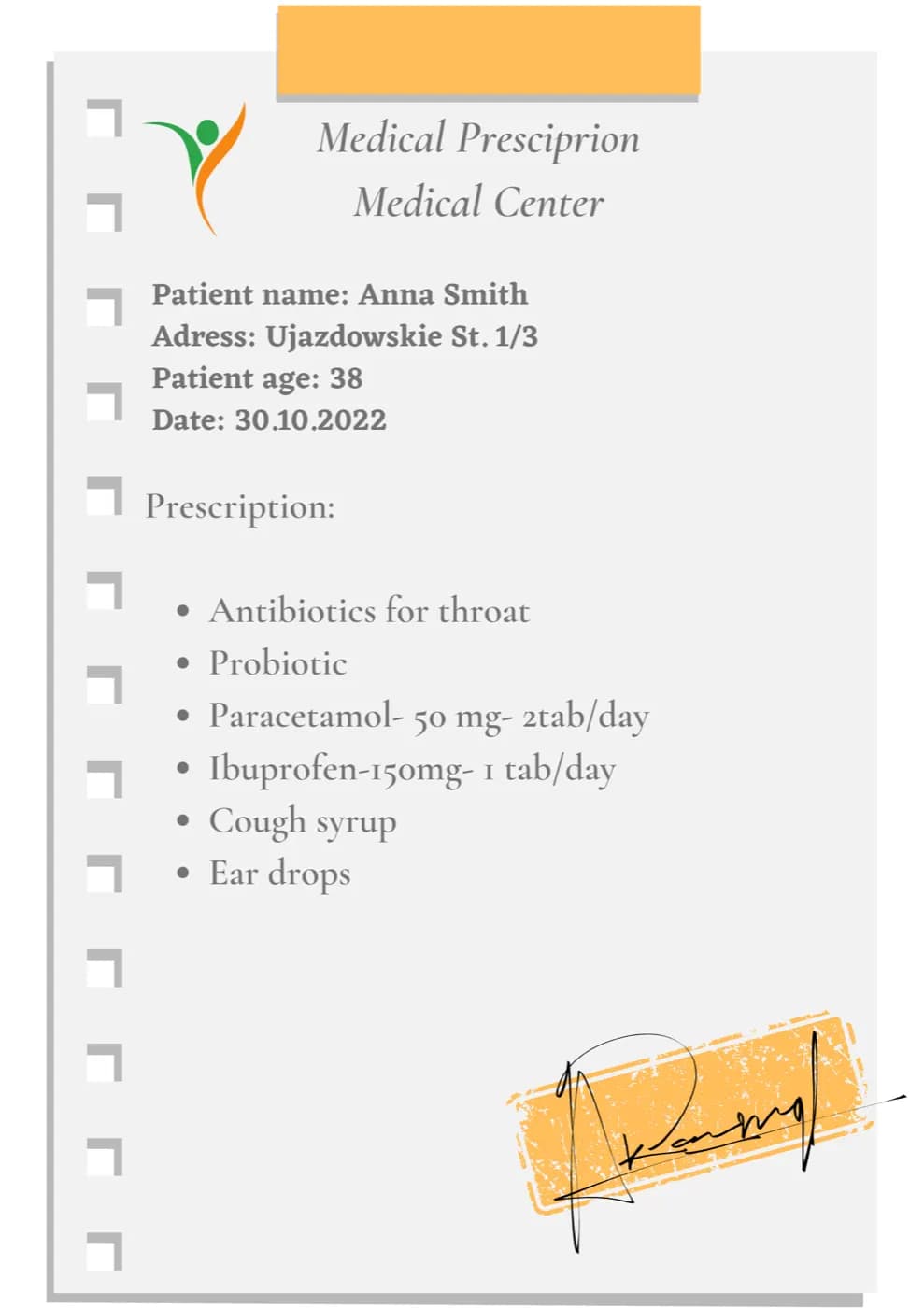
Exercise 3: read the prescription
Based on the prescription, what is the patient suffering from? Then read the conversation in which the patient fills the prescription.
Customer: Hi, I've got a prescription from my doctor. Here it is.
Pharmacist: Thank you. I'll check whether we have everything in stock.
Customer: Okay.
Pharmacist: I'm afraid we've run out of cough syrup, but we can order it and it should arrive tomorrow.
Customer: That would be great, please.
Pharmacist: Would you like some throat lozenges for now?
Customer: What are they?
Pharmacist: They're tablets that soothe a sore throat and reduce the pain.
Customer: Are they expensive?
Pharmacist: No, about $5 for a pack of 30.
Customer: Okay, I'll take them too.
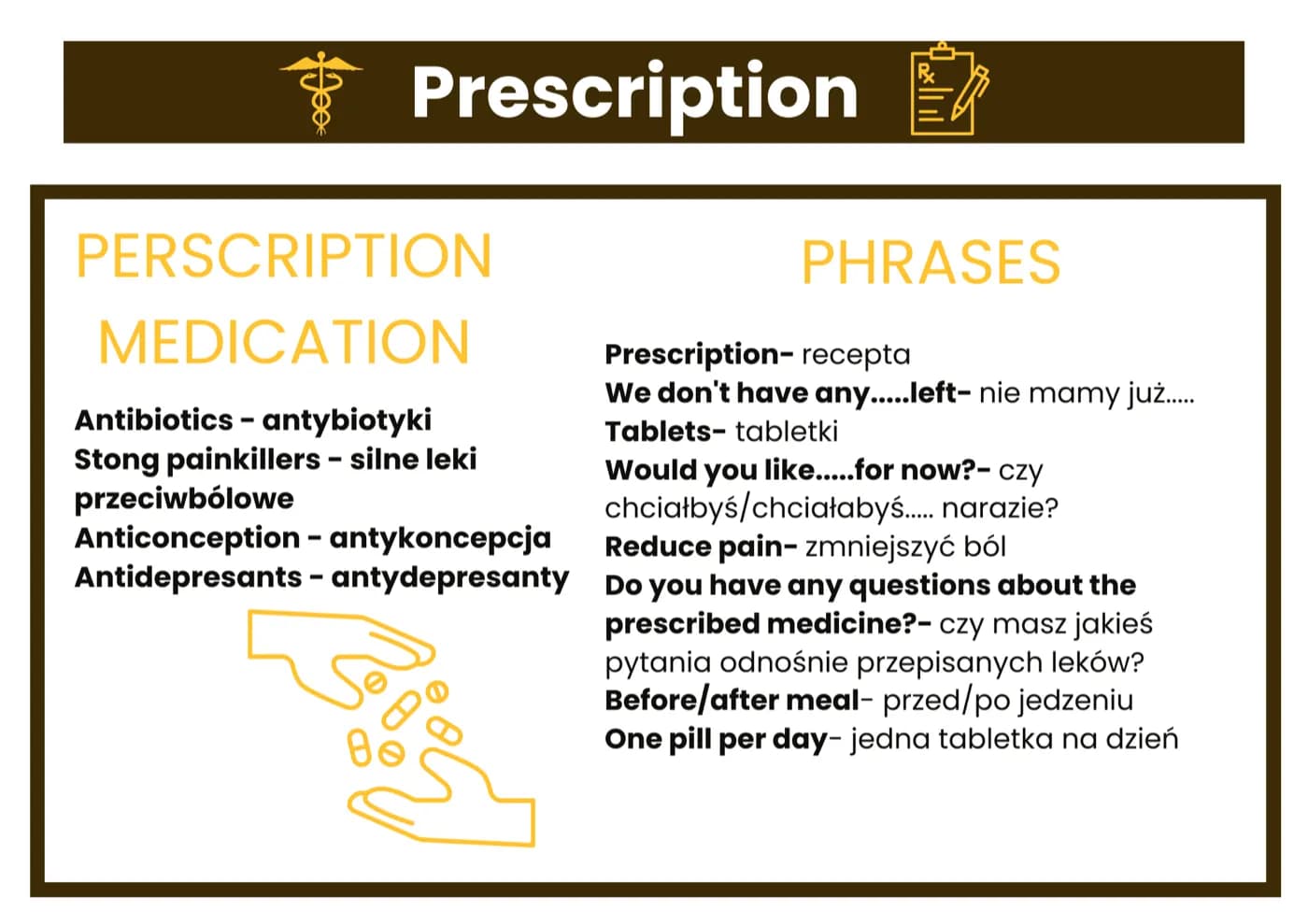
Pharmacist: Perfect. Do you have any questions about the prescribed medicine?
Customer: Yes. Should I take the antibiotics before or after meals?
Pharmacist: Before meals.
Customer: And how long should I take them for?
Pharmacist: Two weeks, one pill a day.
Customer: Thank you. That's all.
Pharmacist: That will be $60.
Customer: Here you are. Goodbye.
Pharmacist: Goodbye!
All sorts of things can happen abroad, and being able to cope at the pharmacy is sometimes essential. You now know the key words and phrases for a pharmacy visit, and the dialogues help you step into the patient's role and remember more of them. I hope this lesson helps if something unexpected happens on your travels, and helps you get well again quickly.