Single / Post
- Posted Date:
- Sep 13, 2022
- Category:
At the Office: Essential English Vocabulary

Every job has its own phrases and expressions worth knowing, and office work needs specific vocabulary whatever language you use. There are many typical office items you'll come across, and many people you deal with every day, so language is an essential tool. This lesson is for those of you who work in an office and for anyone who wants to build up this vocabulary. It's the first of several office lessons on the blog, and we start with the basics: the things around you at work.
Office equipment
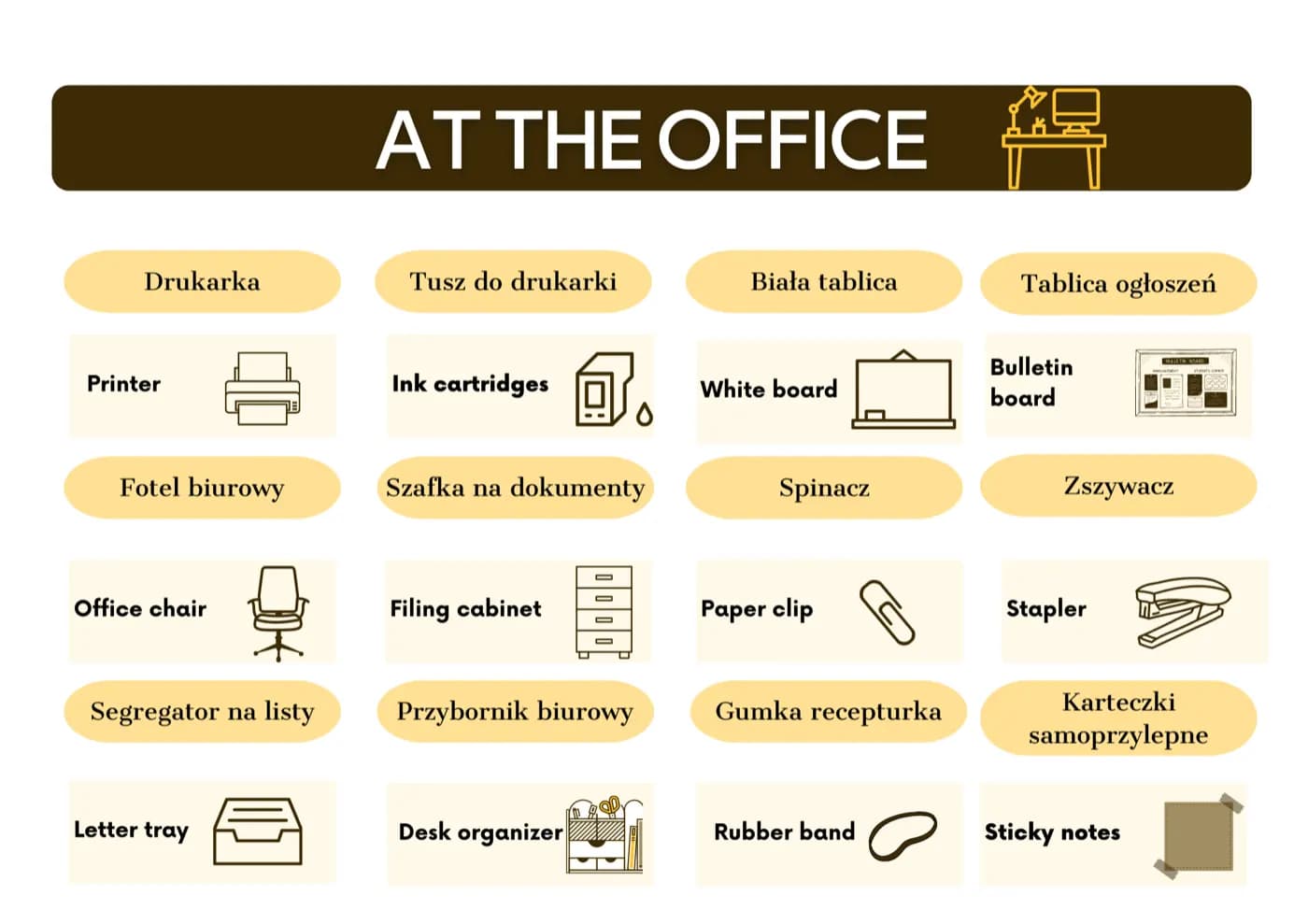
- Printer: used to print documents from your computer. In some offices you'll also see fax machines and photocopiers.
- Ink cartridges: printers need them to print words and images on paper.
- Whiteboard: used to present information and graphs with markers, often during group presentations.
- Bulletin board (UK: noticeboard): a place where you can leave messages for other people.
- Office chair: a chair designed for use at a desk, usually a swivel chair with wheels and adjustable height.
- Filing cabinet: a large piece of office furniture, usually metal, with deep drawers for storing documents.
Desk supplies
- Paper clip: a metal or plastic clip that holds several sheets of paper together.
- Stapler: used to fasten sheets of paper together.
- Letter tray: a tray or container for letters, notes and so on.
- Desk organiser: a container kept on a desk for stationery and other small items.
- Rubber band: a loop of rubber for holding things together.
- Sticky note: a small piece of paper with a sticky strip on the back, so you can stick it on a surface and peel it off again.
Exercise 1
Fill in the gaps with the words in the box. Use the plural where needed.
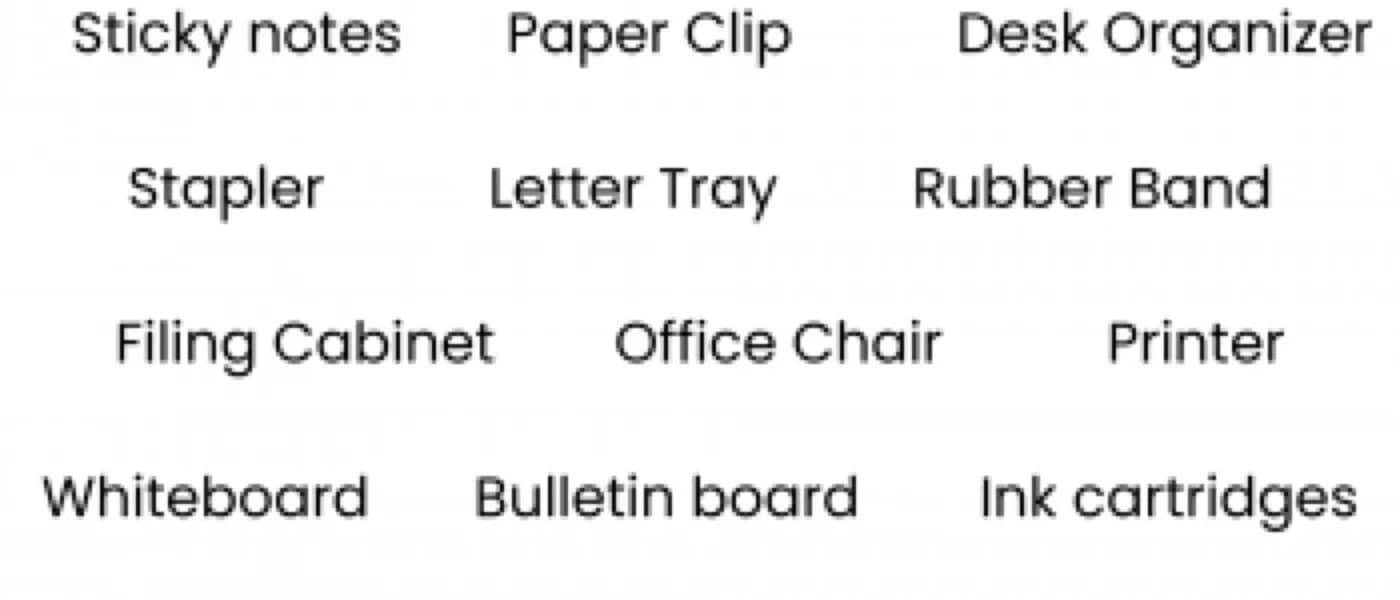
- Has anyone seen my …………………? I need to write a note.
- Kate needs to buy more staples for her ………………….
- Look! This desk is well organised: pens and scissors are all in a …………………
- I think the ………………… is broken. I can't print anything.
- Don't forget to leave the note on the …………………
- Do you need a ………………… and markers for your presentation?
- Just put the files in the …………………
- We've run out of …………………, so unfortunately we can't print your file right now.
- I always keep my letters in a …………………
- Hey, do you have any …………………? I want to keep my documents together.
- Our boss just got us new …………………, so now we can sit properly.
- I don't need this …………………; I've already organised my cables.
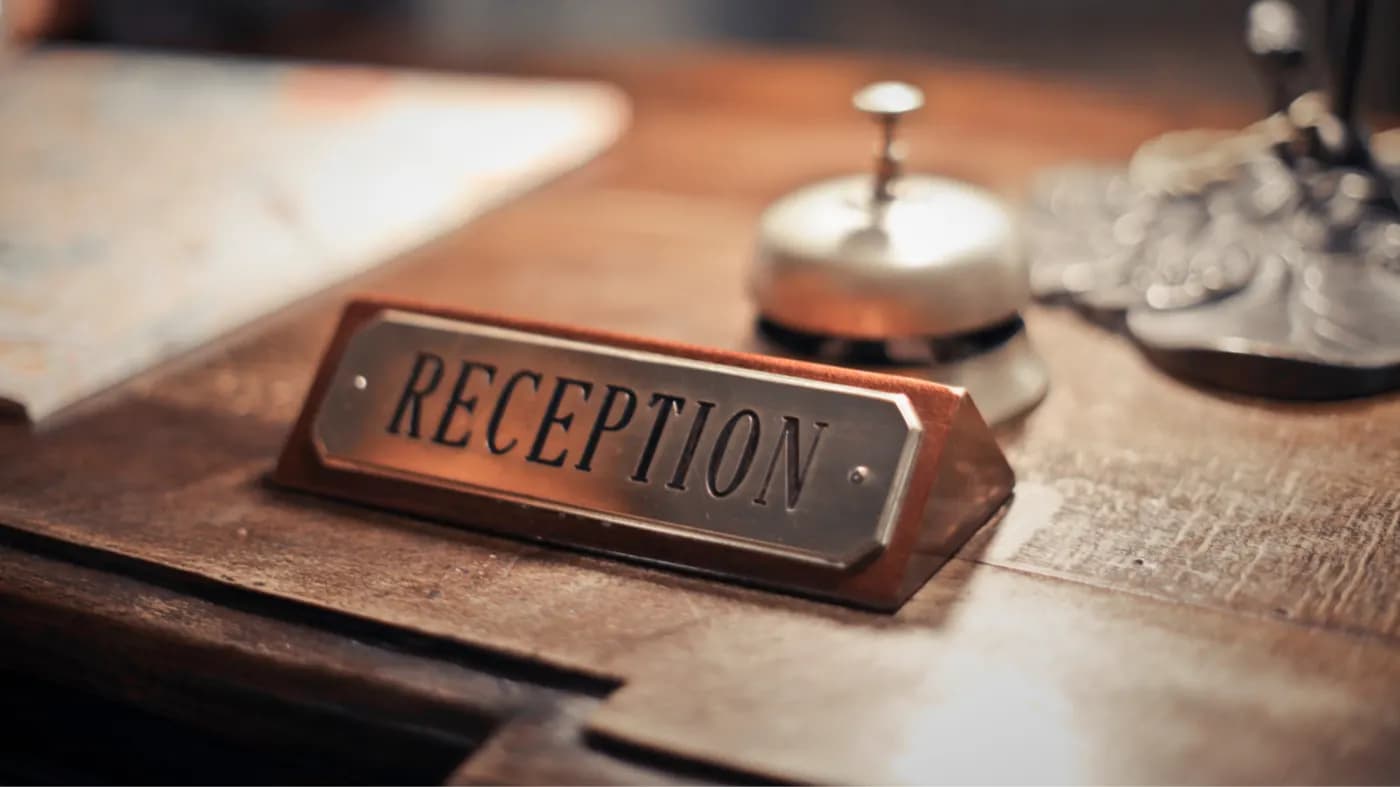
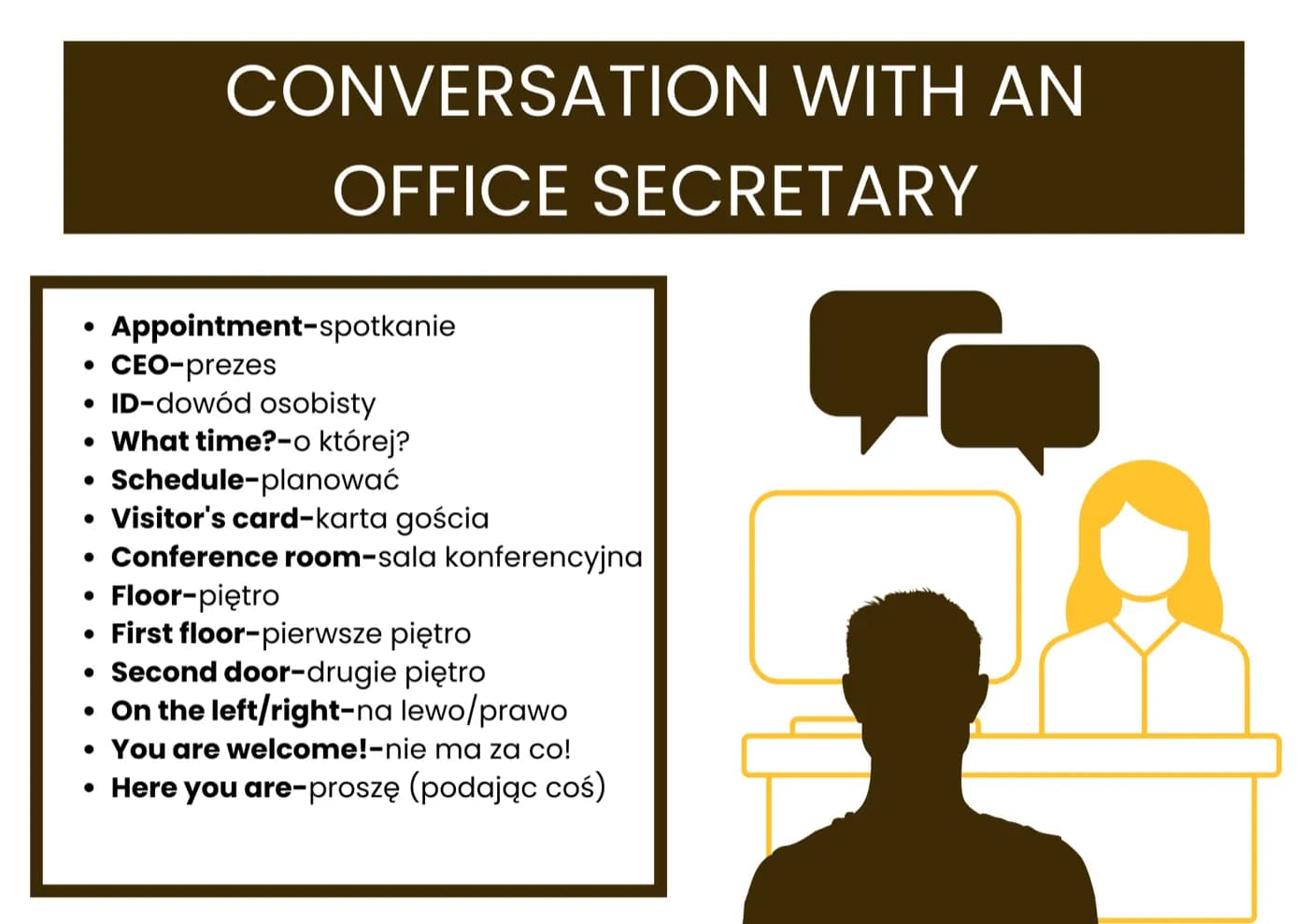
A conversation with an office receptionist
At the office: the dialogue
You: Good morning, I have an appointment.
Receptionist: Who is your appointment with?
You: With the CEO of the company, Marta Krawczyk.
Receptionist: Could I see your ID, please?
You: Yes, here you are. (We say this when we hand something to someone.)
Receptionist: What time is your appointment?
You: It's scheduled for half past four.
Receptionist: Here is your visitor's badge. She is waiting for you in the conference room.
You: Which floor should I go to?
Receptionist: The meeting room is on the first floor, second door on the right.
You: Thank you for your help.
Receptionist: You're welcome!
Exercise 2
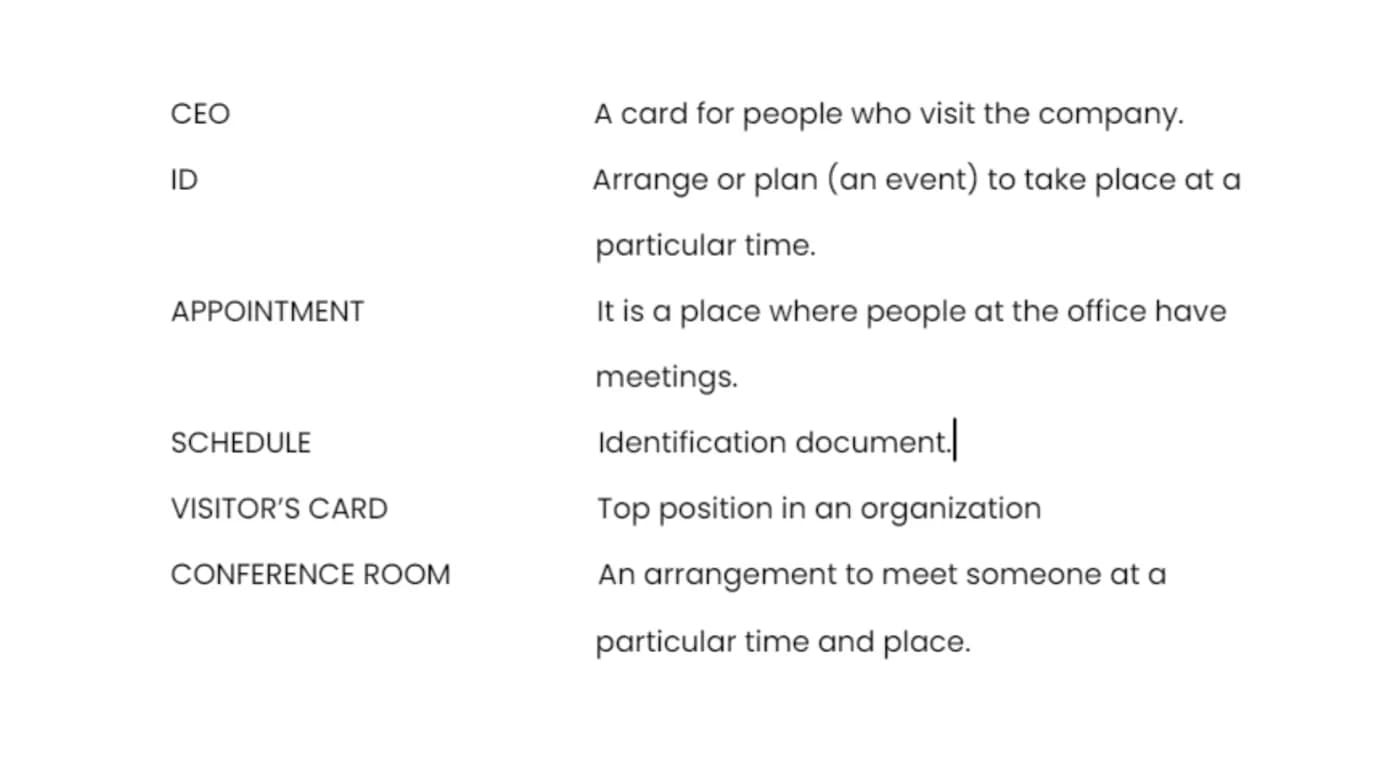
Match the words to their meanings.
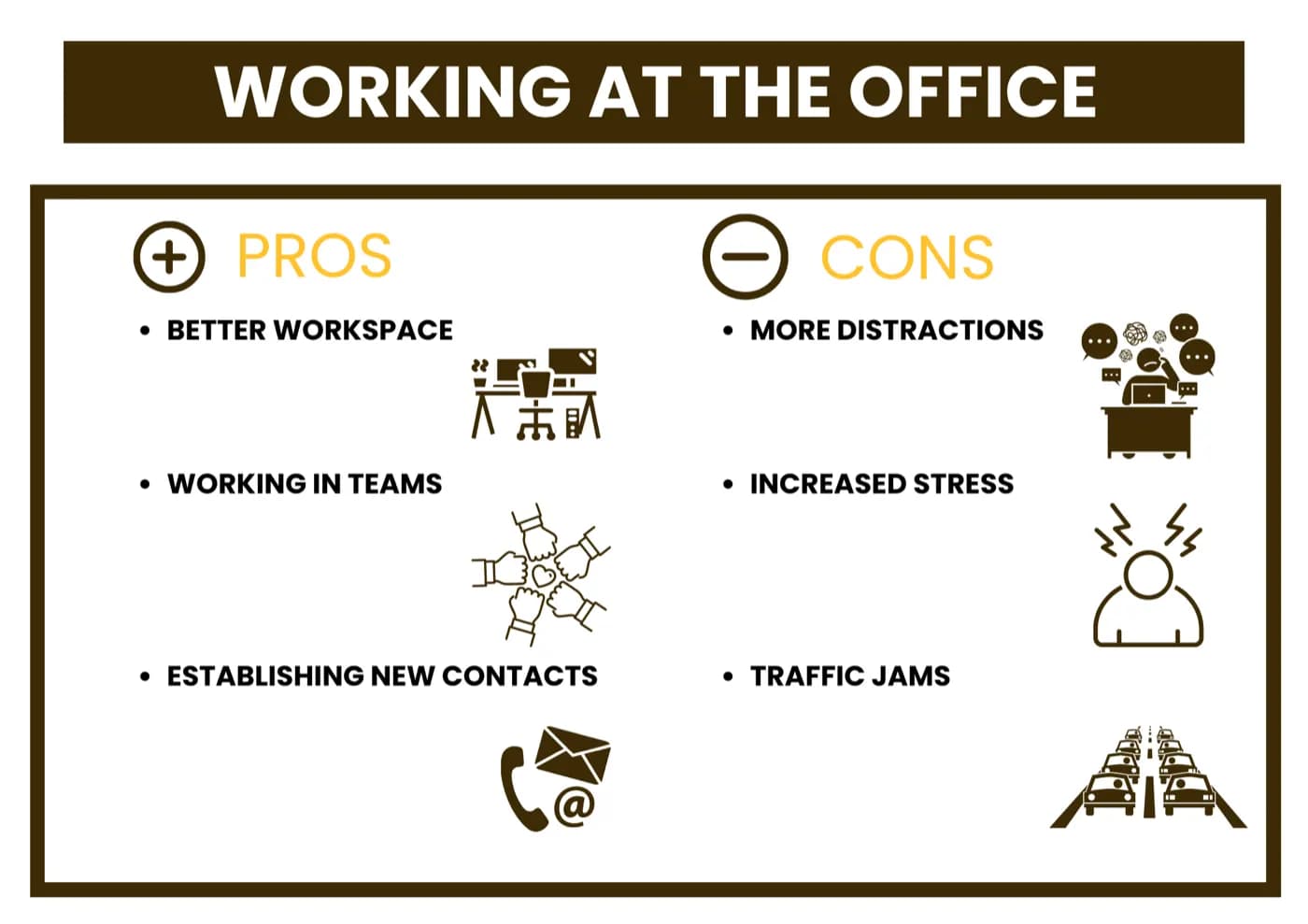
Pros and cons of working in an office
Finally, a few thoughts on office work. Let's start with the positives.
Pros
Pros of working in an office
- A better workspace. It's easier to work when everything you need is within reach. Your desk holds only your work papers, and all the equipment (printers, fax machines, copiers) is there whenever you need it.
- Working in teams. Some tasks need a bigger group, especially when there's a lot to do in a short time. Working together in person is more effective than splitting the tasks up to do alone.
- Making new contacts. An office helps you build relationships and make contacts that may be useful in the future.
Cons
Cons of working in an office
- More distractions. Talking to colleagues is great, but it can also pull you away from your work.
- More stress. Meetings and face-to-face confrontations can cause stress and anxiety in some situations.
- Traffic jams. In big cities you may have to cross half the city to get to the office, which can be tough.
Summary
I hope you now know your office supplies and that the exercises help you remember them. Don't forget to listen to the dialogue with the receptionist and try a similar conversation yourself. Finally, I listed three pros and three cons of office work. What others can you think of?